Your cart is empty
Looks like you haven't added anything to your cart yet



Cold Press vs Centrifugal Juicer: Which Is Best for You?
In the cold press vs centrifugal juicer choice, the right machine depends on what you juice and how much of it. A cold press (masticating) juicer slowly crushes and squeezes produce (50 RPM on our Kuvings models), giving low-foam juice and the best results from leafy greens, so it suits most homes. A centrifugal juicer shreds produce on a fast-spinning disc (3,000 RPM on the Robot Coupe J80) and pours juice in seconds, so it suits busy cafes and juice bars.
Every juicer spec below comes from that juicer's own product page, where you can also see today's price.
How a cold press juicer works
A cold press juicer, also called a masticating or slow juicer, crushes produce with a slow-turning screw (the auger) or a pair of gears, then presses it against a fine strainer. Juice flows out of one outlet and the pulp out of another.
The speeds are low. Kuvings models such as the EVO820 run at 50 RPM, the Ceado CP150 runs at 70 RPM, and the Santos Nutrisantos 65V2 lets you set anywhere from 5 to 80 RPM and choose your filtration size.
Our household range covers three styles:
- Vertical single auger, like the Kuvings range.
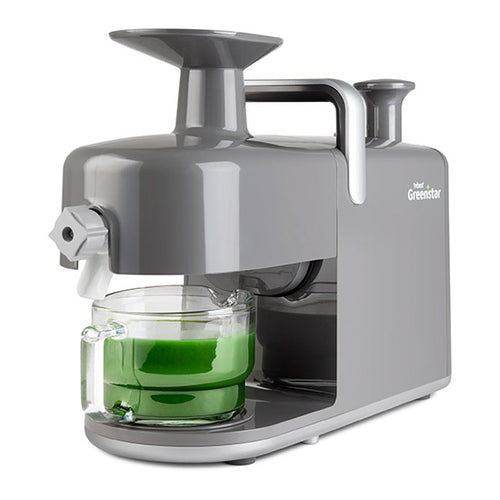
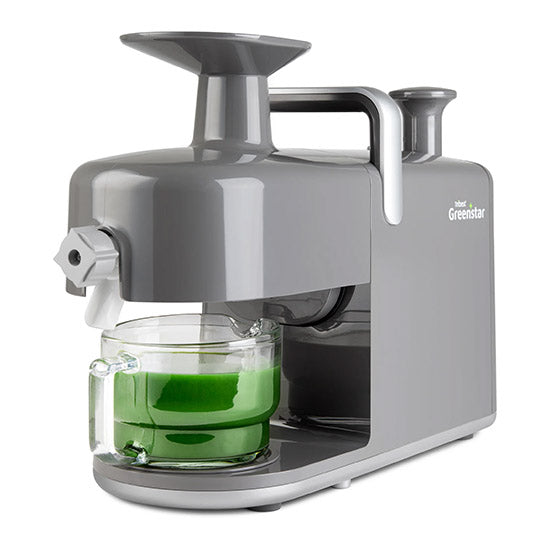
- Horizontal twin gear, like the Greenstar 5, whose stainless steel twin gears turn at 100 RPM on 50Hz power and work in three stages: crushing, mixing and pressing. The Greenstar Elite can also make nut butters and sorbets.
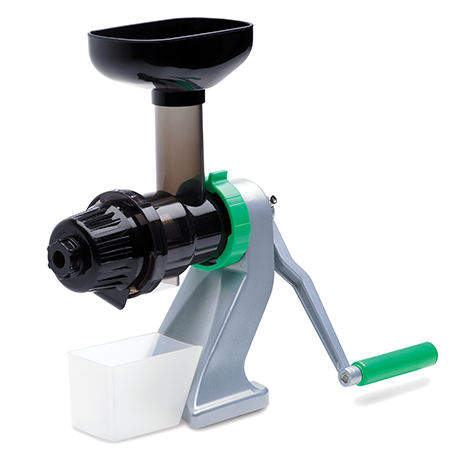
- Manual, like the Z Star Z-710, a portable single auger juicer that needs no power and was made with wheatgrass in mind.
How a centrifugal juicer works
A centrifugal juicer drops produce onto a flat grating disc spinning at high speed inside a fine mesh basket. The disc shreds the produce and the spin flings the juice out through the mesh, while the pulp is thrown into a separate container.
The Robot Coupe J80 is a classic example: a stainless steel basket, grating disc and filter turning at a constant 3,000 RPM, with a 6.5-litre pulp container. Commercial models eject pulp as they go, and the Robot Coupe J100 even has a chute that sends it straight into a bin under the bench.
Cold press vs centrifugal juicer: side by side
| Cold press (masticating) | Centrifugal | |
|---|---|---|
| How it gets the juice out | A slow auger or twin gears crush, then press | A grating disc shreds, then the spin forces juice through a mesh basket |
| Speed (examples from our range) | 50 RPM (Kuvings), 100 RPM (Greenstar 5) | 3,000 RPM (Robot Coupe J80), 3,500 or 4,500 RPM (Zumex Multifruit) |
| Output (commercial examples) | 40 litres an hour (Kuvings CS600), up to 110 litres an hour (industrial Zumex MASTERY) | 120 litres an hour (Robot Coupe J80), 180 litres an hour (Ceado CJC0900) |
| Foam | Usually very little | Usually more, so serve it straight away |
| Leafy greens and wheatgrass | Its strength | Varies by model |
| Hard fruit and vegetables | Handles them, more slowly | Its strength |
| Noise | Low | Usually louder; Santos lists 65 dBA for its #50CX |
| Best for | Homes, green juices and cold-pressed menus | High-volume cafes, juice bars and buffets |
Yield and foam
Yield
A press squeezes, so it does its best work on leafy and fibrous produce that a fast disc can struggle with, which is why cold press leads for green juice. Greenstar says the Greenstar 5 effortlessly juices celery, root vegetables, ginger and wheatgrass, and the Kuvings REVO830 adds a 45mm chute for celery, carrots, leafy greens and cucumber.
Centrifugal juicers shine with firm produce: the Santos #50CX takes apples and carrots through its 79.5mm opening without cutting. Some are built for greens too, as Ceado designed the grating disc and mesh filter on its CJC0700 to perform even with leafy vegetables.
Foam
High speed whips air into the juice, so centrifugal juice usually pours with a frothy head and is best served straight away. Cold press juice usually comes out with very little foam. Commercial centrifugal makers work on clarity too: Ceado's Pulp Retainer is designed for clearer, brighter juice.
Speed and prep time
For sheer speed, centrifugal wins. Robot Coupe rates the J80 at 120 litres an hour, or one glass of juice every 7 seconds. Ceado's CJC0700 makes two litres in a minute, and the Santos 68X is rated at 1.5 litres a minute. A commercial cold press is slower: the Kuvings CS600 is rated at 40 litres an hour.
Cold press prep time has dropped thanks to wider chutes: 82mm on the EVO820 and REVO830, and 88mm on the commercial Kuvings CS700. The Kuvings AUTO10 goes further with a 3-litre hopper: load it with whole fruit, vegetables and herbs, press the button and walk away.
Cleaning
Both types need a rinse straight after use, before the pulp dries on. With a cold press you clean the auger (or twin gears) and the strainer: the REVO830 comes with cleaning brushes and a Smart Cap for a pre-rinse, the CS700 is dishwasher washable, and the Greenstar 5 has fewer parts, so there is less to clean.
Commercial centrifugal juicers are built to come apart fast. Santos's Ezy-clean system releases the bowl, basket and cover with no tools, Ceado's baskets have a magnetic catch, and every food-contact part of the Ceado CJC0900 is dishwasher safe.
Noise
A slow motor is a quiet motor, which makes a cold press the easy pick for open-plan homes and early starts. Kuvings says the slow processing speed keeps the CS600 cool, quiet and stable, and Ceado describes its CP150 as extremely silent in operation.
A centrifugal motor spins far faster, so it is usually louder, but commercial makers work on it. Santos lists the #50CX at 65 dBA, and Zumex puts the Multifruit under 70 dB with an anti-vibration Silent Block. Running a cafe? See our guide to quiet blenders for cafes and juice bars too.
Home or commercial: which should you choose?
For home juicing
Looking for the best juicer in Australia for home use? For most homes we recommend a cold press, and our household juicers are all cold press models. Many carry long warranties too: 20 years on the motor and 5 on parts for the Kuvings EVO820, REVO830, AUTO10 and C8000, and 15 years on the motor and 5 on parts for the Greenstar 5.
Household machines are rated for a juicing session, not a full day's trade. The EVO820 and AUTO10 are rated for 30 minutes of continuous use, the C8000 for 45 minutes, the Greenstar 5 for up to 40 minutes per session and the REVO830 for an hour.
For cafes, juice bars and buffets
Start with your menu and your daily volume. If you pour mostly apple, carrot, pineapple and ginger juices at speed, a commercial centrifugal is the workhorse:
- Ceado CJC0500 for around 10kg of produce a day, CJC0700 for more than 10kg and CJC0900 (on-counter or through-counter) for more than 20kg, all with a 3-year back-to-base warranty and 10 years on the motor.
- Santos #50CX, made in France, with a 200mm spout height that fits glasses, jugs and blender jars.
- Robot Coupe J80 Buffet, ideal for self-service at breakfast buffets, canteens and cafeterias.
- Zumex Multifruit, with two speeds and a 13-litre waste container.
If your menu is built on cold-pressed and green juices, choose a commercial cold press:
- Kuvings CS600: 40 litres an hour, a stainless steel chassis and a 5-year motor warranty (1 year on parts) for commercial use.
- Kuvings CS700: a stainless steel drum and a motor rated for 24 hours of non-stop operation.
- Santos Nutrisantos 65V2: made in France and designed to make cold-pressed juice on demand, in front of the customer.
- Zumex MASTERY: an industrial press making up to 110 litres an hour, depending on the produce. It is quoted to order, so email us.
If your menu has both, one of each is a sensible setup: a centrifugal for speed and a cold press for greens. Compare them all in our commercial juicers range.
Citrus is a job of its own
For oranges, lemons and limes in volume, a dedicated citrus juicer is the better tool. The Hamilton Beach Commercial Manual Citrus Juicer, first made in 1932, needs no power, and its arm applies up to 907kg of force for maximum juice with minimal skin oil and pulp. For self-serve orange juice, the Zumex Versatile Pro lets customers simply press the tap. Browse our citrus juicers or read our guide to the best juicer for lemon and lime juicing.
Frequently asked questions
Is a cold press juicer better than a centrifugal juicer?
Not always. A cold press is better for leafy greens and wheatgrass, runs quieter and makes juice with very little foam, so it suits most homes. A centrifugal is much faster with hard fruit and vegetables, so it suits busy cafes and juice bars.
Masticating vs centrifugal: what is the difference?
Masticating is another name for cold press: a slow auger or twin gears crush and press the produce. A centrifugal juicer shreds produce on a grating disc spinning at high speed (3,000 RPM on the Robot Coupe J80, up to 4,500 RPM on the Zumex Multifruit) and spins the juice through a mesh basket.
What is the best commercial juicer for a cafe?
Match it to your daily volume and your menu. Ceado sizes its centrifugal juicers by produce per day, from around 10kg (CJC0500) to more than 20kg (CJC0900). For a cold-pressed menu, look at the Kuvings CS600 or CS700.
Which type of juicer is quieter?
Cold press, because the motor turns slowly. Among commercial centrifugal juicers, Santos lists 65 dBA for the #50CX and Zumex puts the Multifruit under 70 dB.
Should I buy a juicer or a blender?
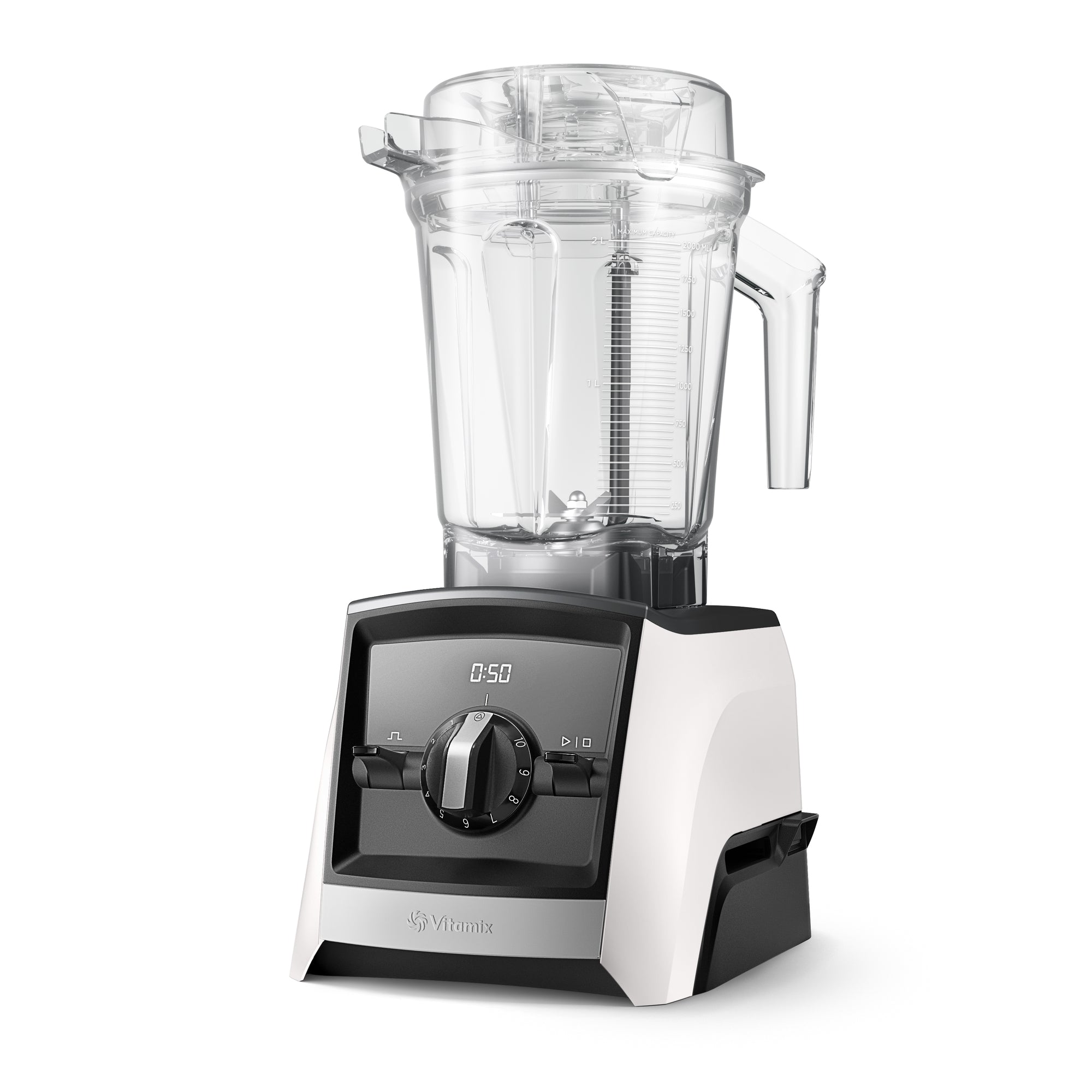
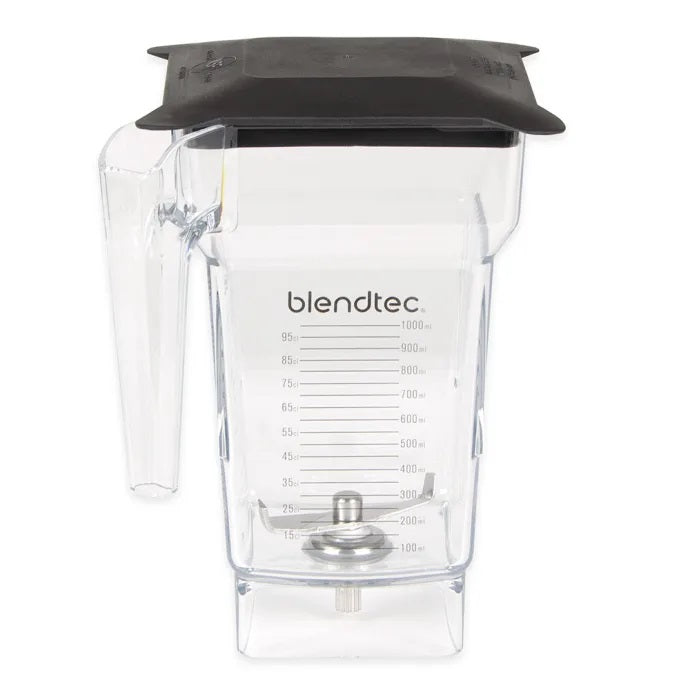
A juicer separates the juice from the fibre, while a blender keeps the whole fruit, fibre and all, for smoothies and acai bowls. If you would rather keep the fibre, take our Find your blender quiz or read how to make the perfect smoothie.
Still weighing it up? We have been in the blending business for over 30 years, and we're happy to help you match a juicer to your kitchen or menu. Chat with us using the chat on our site, email info@blendersonline.com.au or send a message through our contact page. You can also browse our cold press juicers and centrifugal juicers and check today's prices.
Happy Blending!
- Choosing a selection results in a full page refresh.